Loading…
.jpg&w=3840&q=75)
Publishing Platform & EditorialThe Selves of Us2026
A Custom Publishing Platform for a Literary Media Company
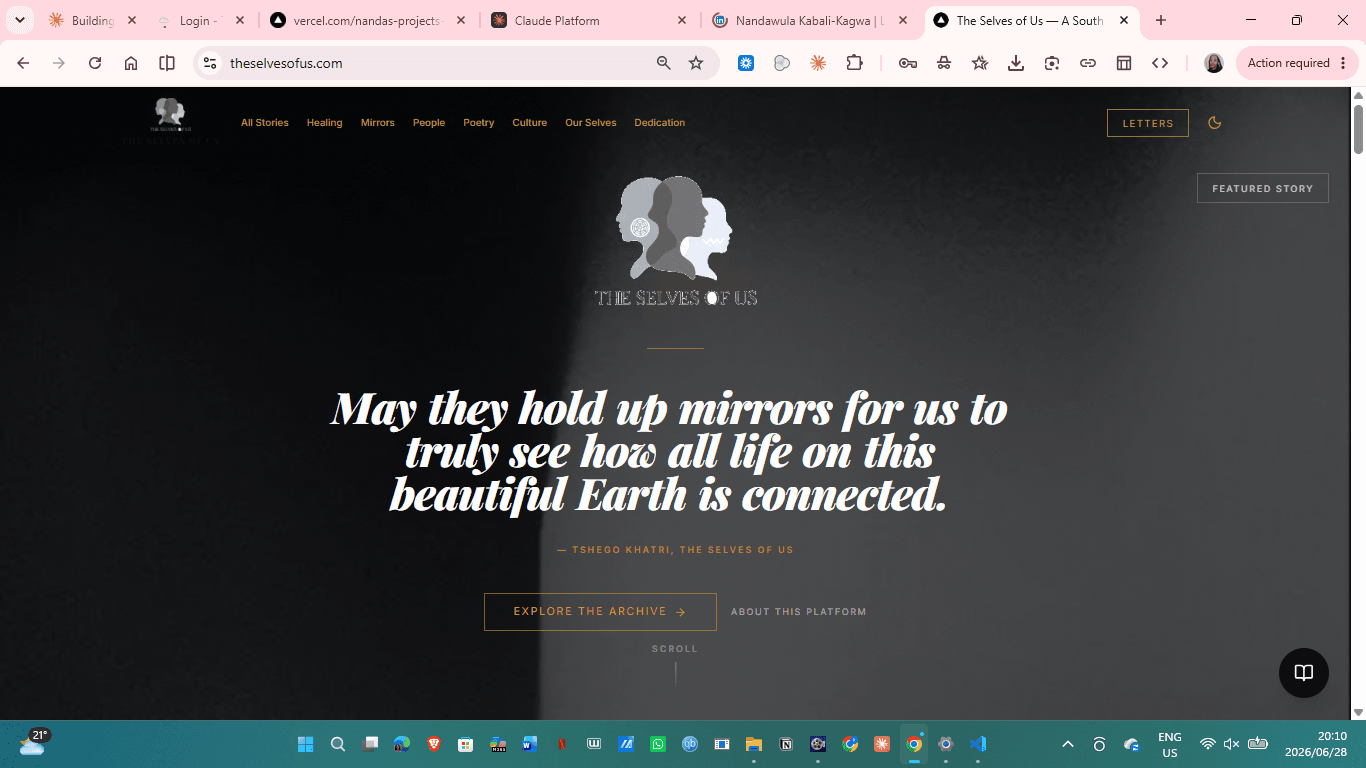
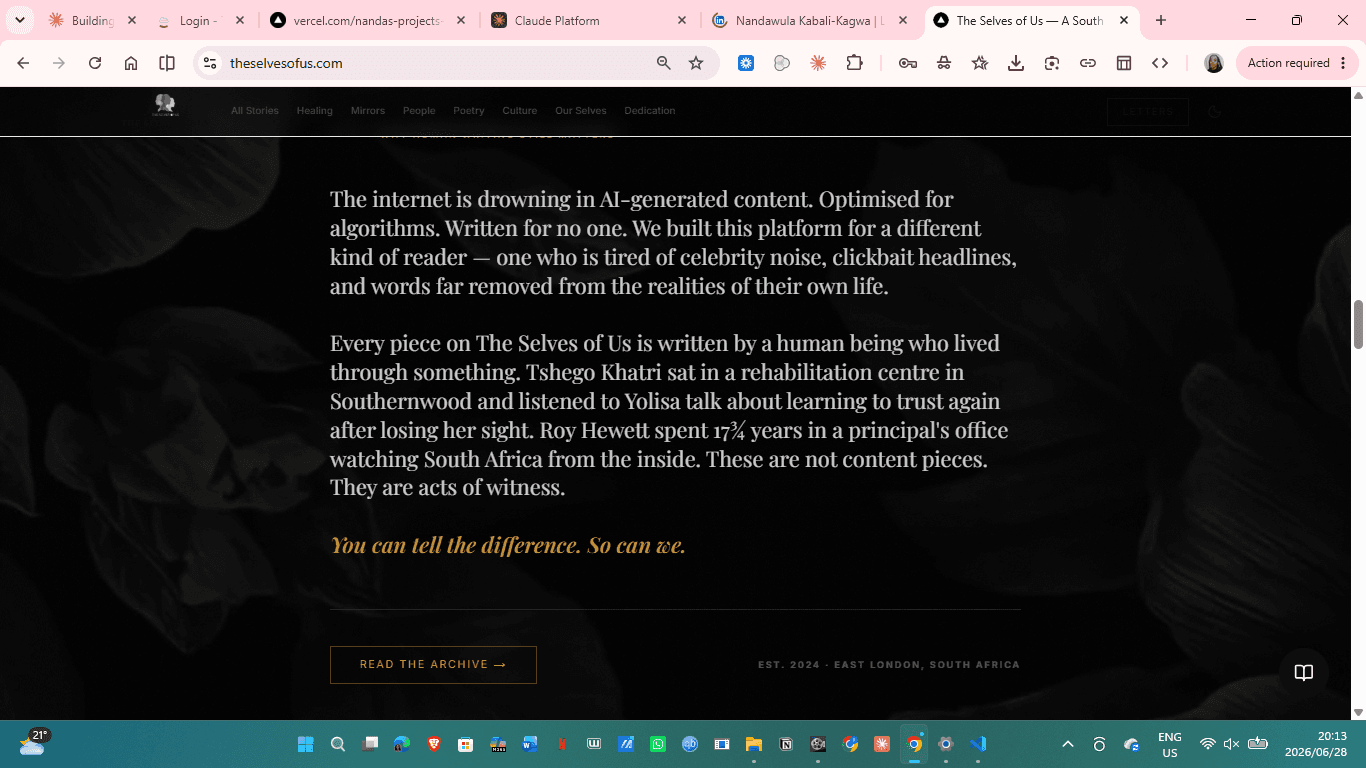
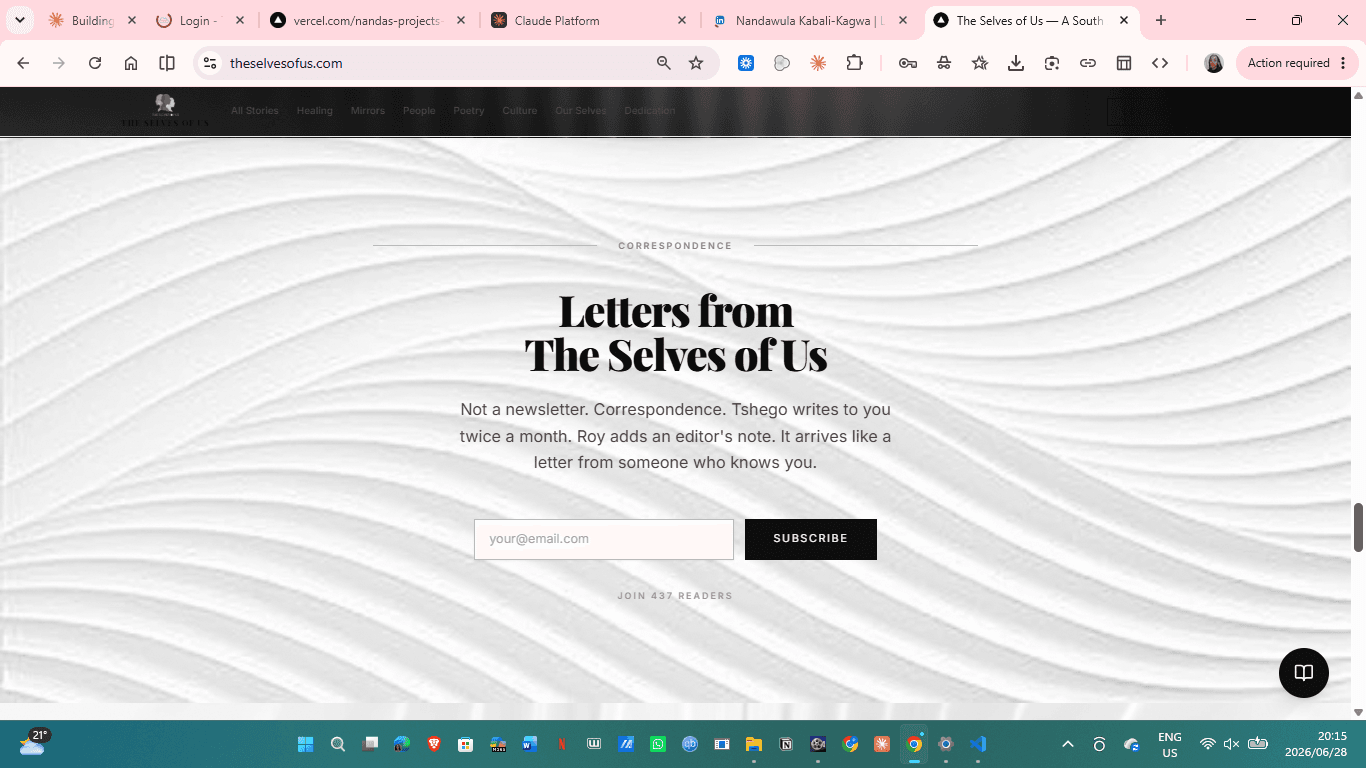
Two writers, Tshego Khatri, a Botswana-born poet, and Roy Michael Hewett, a retired principal and editor, had a rare literary voice but no infrastructure. We built the brand system first, then engineered the whole platform: a custom literary CMS, a podcast room, a bookshop, a newsletter, and AI reader tools.
93
pages, custom platform
25
database tables
6
AI assist features
68%
newsletter open rate
The bottom line
A full custom publishing platform, 93 pages on a 25-table schema, and a literary brand whose newsletter is opened by 68% of its readers, far above industry norm.
.jpg&w=3840&q=75)
Die Uitdaging
The Selves of Us had a genuinely rare literary voice, Tshego Khatri's poetry and Roy Michael Hewett's editorial craft, and a clear stance: human writing, in a web drowning in AI-generated content. What it had no version of was infrastructure: no consistent publishing system, no home for the podcast, no way to sell the books, and no way to scale what was working without burning out the founders. The brand needed a voice architecture, and then a real platform to carry it.
The Voice, Then the System
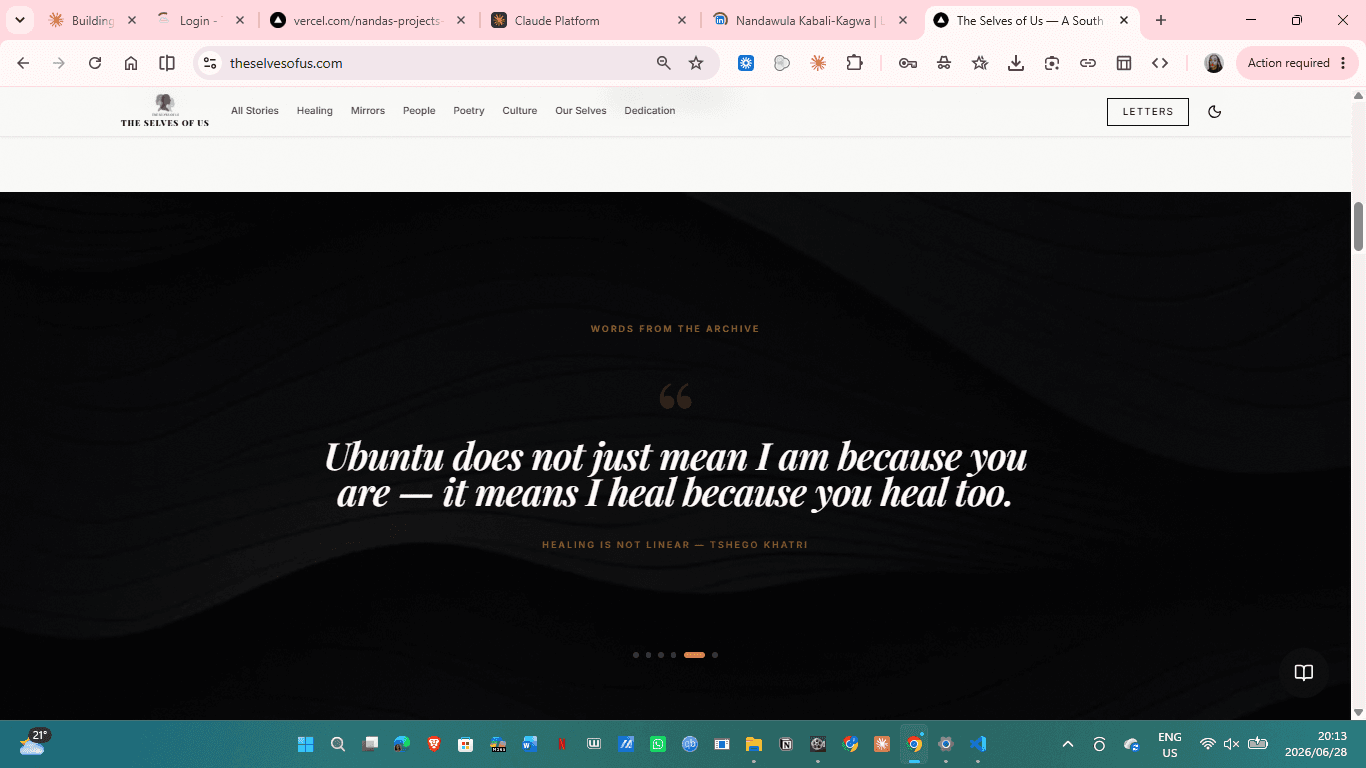
We started with extraction: deep interviews, a competitive landscape review, and an audit of what was already resonating, and why. What emerged was a Brand Voice Guide of decision frameworks, not just tone words: when the brand speaks as the poet, when as the editor, and how to blend both without losing coherence.
But a voice guide is only worth as much as the system that carries it. So the engagement became an engineering one: build The Selves of Us its own publishing platform.
.jpg&w=3840&q=75)
A Custom Literary Publishing Platform
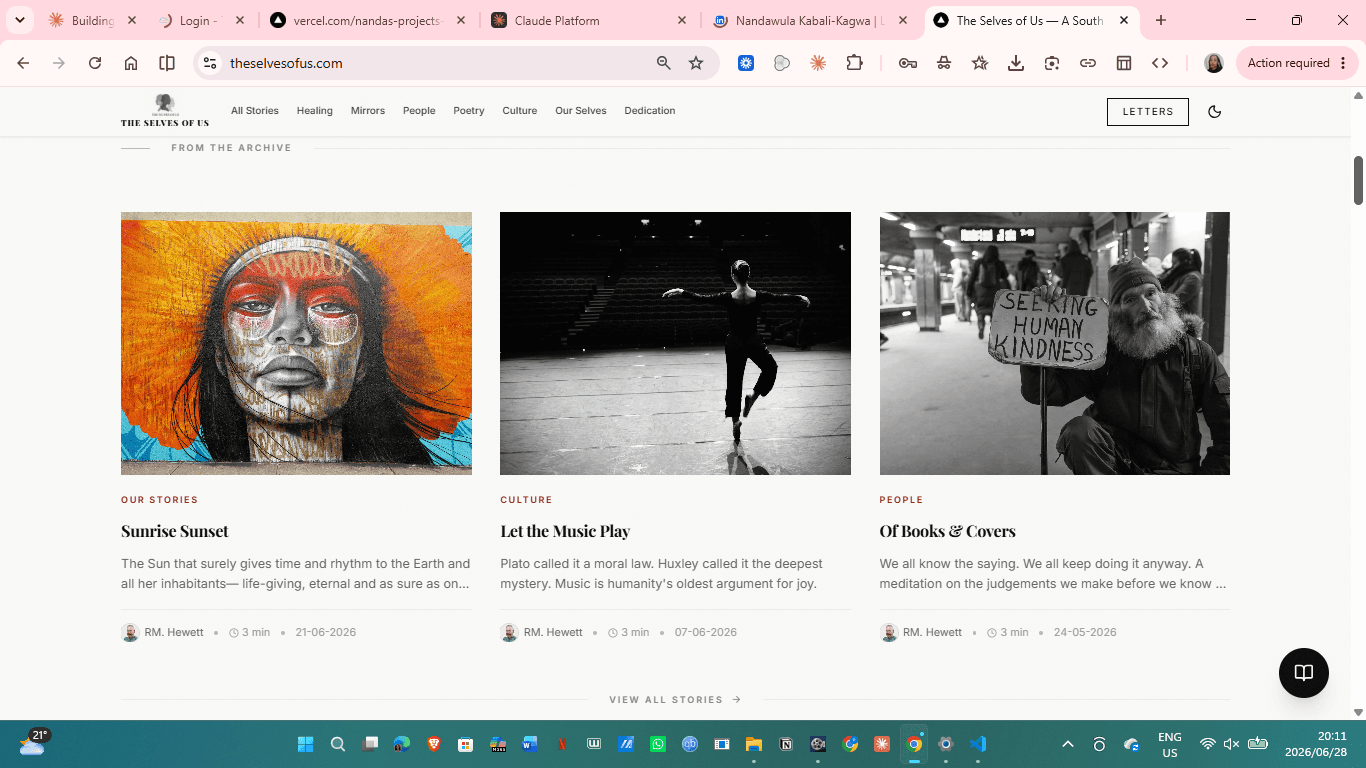
We designed and built the platform end to end, 93 pages and 48 API routes on a 25-table Postgres schema. At its centre is a three-role editorial CMS (founder, editor, studio) with a real workflow, draft → review → version-tracked edits → publish, on a rich-text editor, with row-level security on every table.
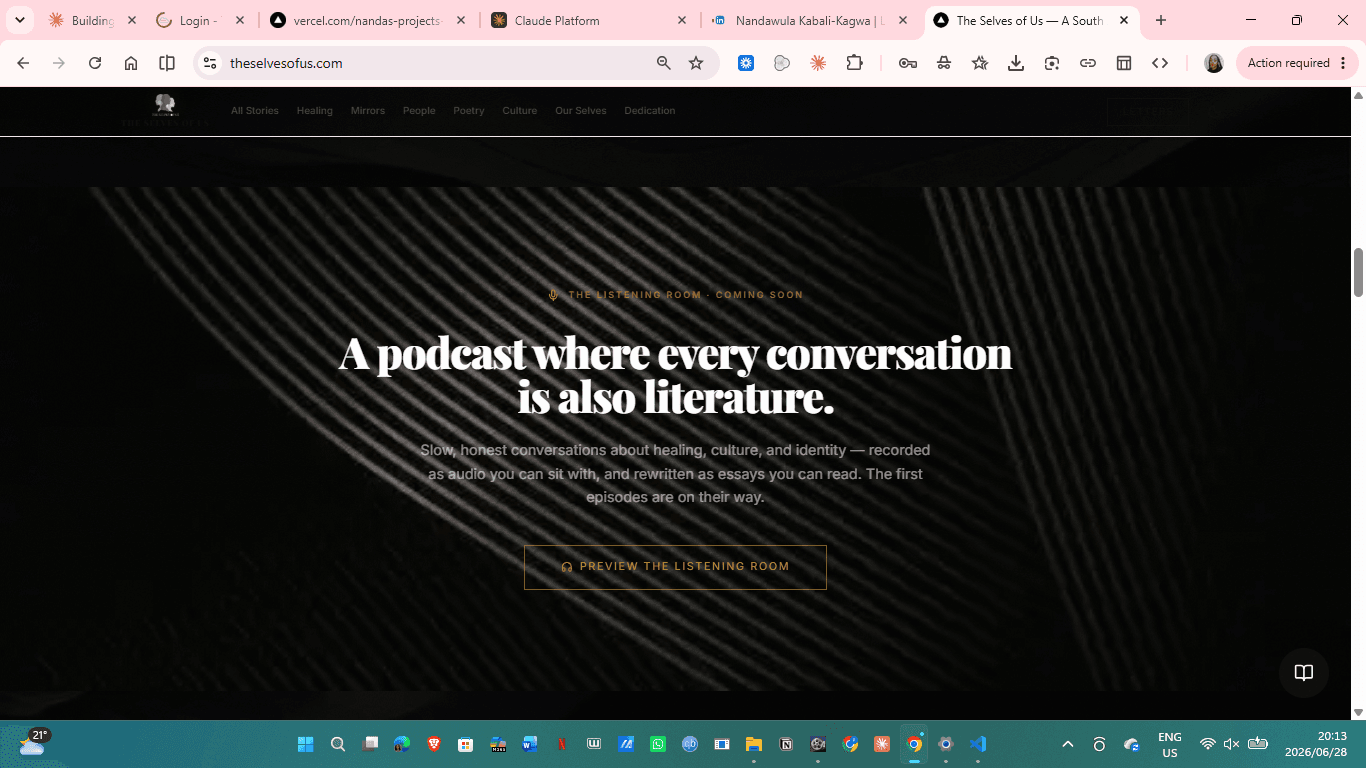
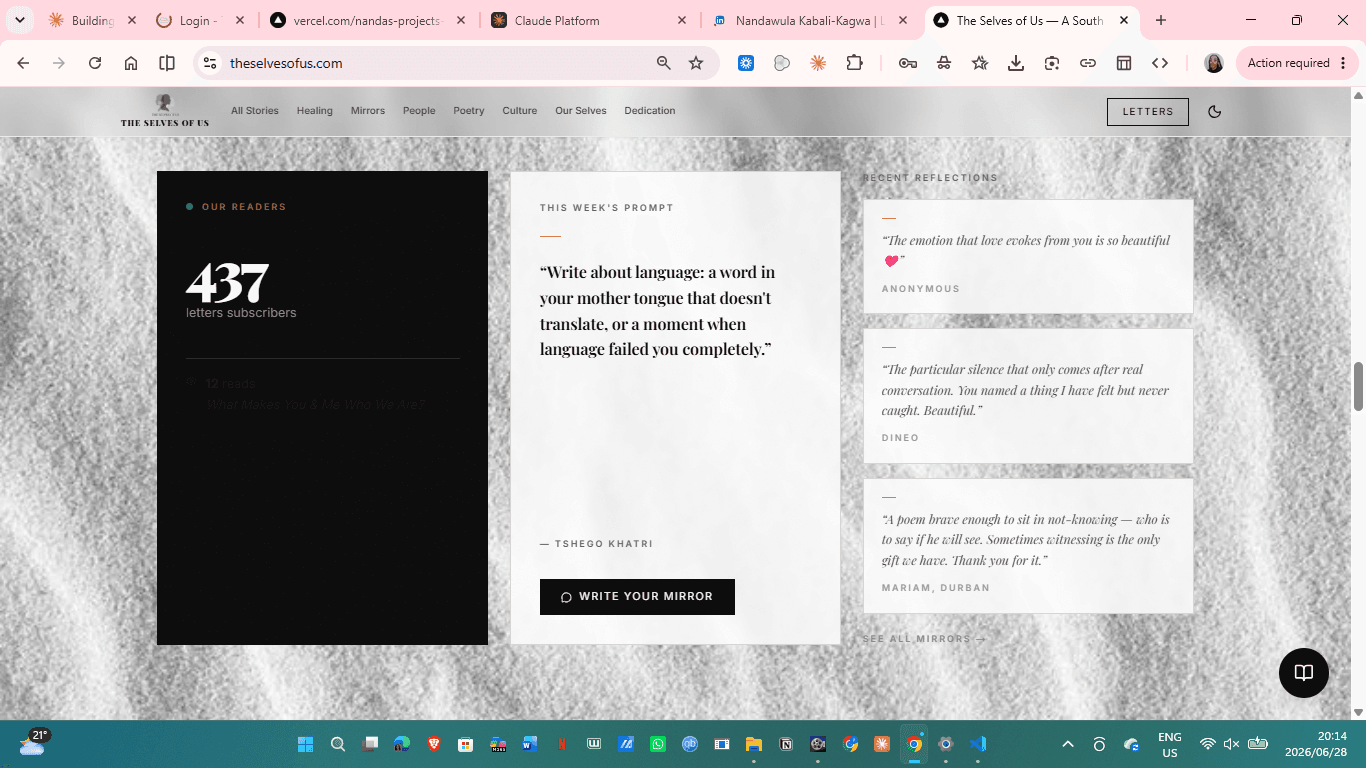
Around it: "The Listening Room" podcast platform with a custom audio player; full-text search across the archive; a newsletter engine with draft/approve/send and open-tracking; and PayFast e-commerce for book sales and recurring supporter subscriptions.
AI That Reflects, Never Writes
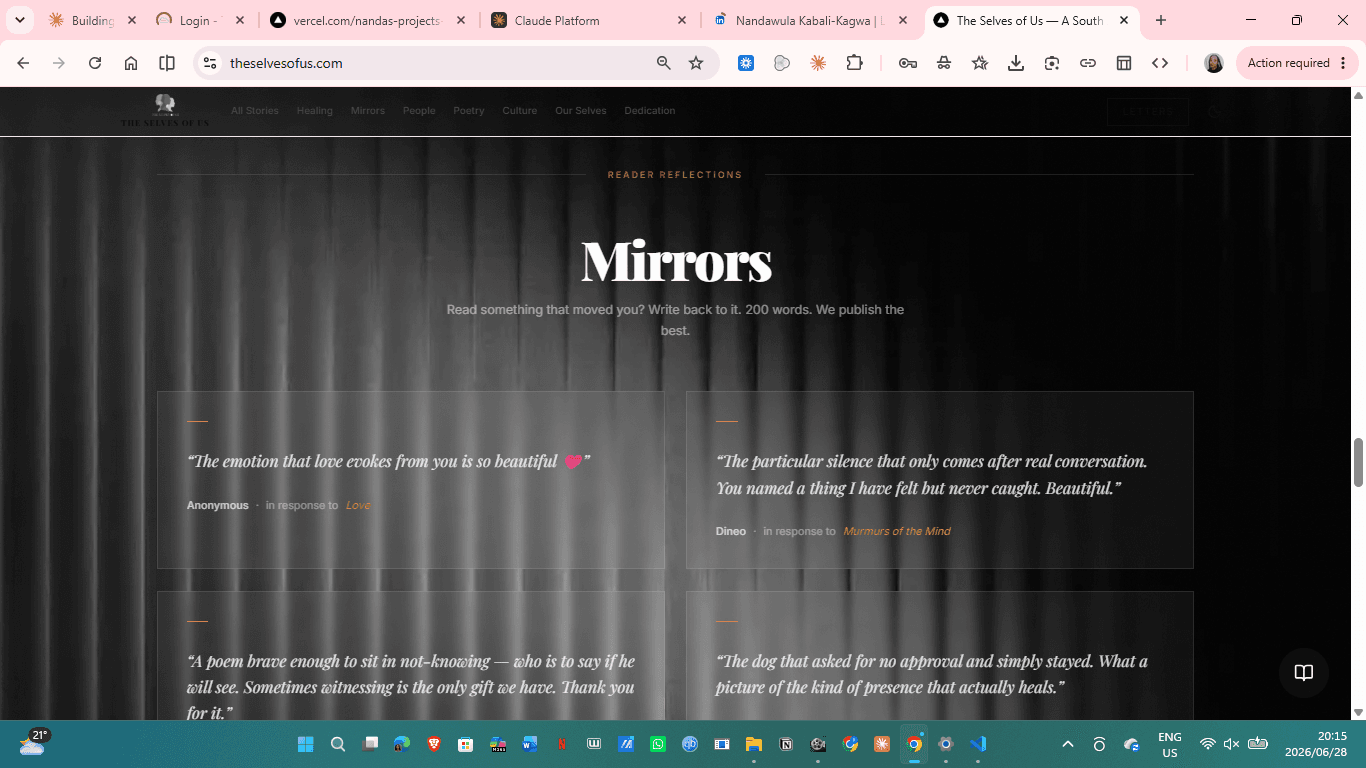
For a publication whose whole stance is anti-AI-generated content, the AI had to assist, never author. We built six Claude features to that rule: "The Librarian" answers readers from the live story archive; "The Mirror" reflects a writer's own work back to them without rewriting it; and "Editor's Eye" supports the editor's review.
A white-label social module, with a token-authenticated client approval portal and scheduled publishing, lets the studio run the brand's social presence from the same system.
.jpg&w=3840&q=75)
Inside the build
.jpg&w=3840&q=75)
Watch it work

Begin 'n Projek
Gereed om iets soos hierdie te bou?
Vertel ons van jou projek. Ons sal dit omlyn, prys, en 'n benadering voorstel, binne 24 uur.